Hybrid monetization begins where the crowd holds its breath
The arena goes quiet in that specific way it only does before a finish. One fighter backs up half a step, the other lunges, and tens of thousands of people inhale at once-some in the building, most on screens. The chat explodes, highlight accounts start clipping, and your concurrency graph climbs like it’s chasing the action.

If you’re the Head of Digital for a league or federation, this is the part you’re supposed to love: proof that your rights still create gravity. It’s also the part that keeps you up at night, because the post-event report has to justify the next rights negotiation and the next budget cycle.
When the event is over and the numbers settle, the revenue story feels oddly capped. Subscriptions were fine, ads did what ads do, and the spike in attention didn’t translate into a spike in value per viewer. You can see it in the dashboard as a familiar shape: a peak in concurrency, a plateau in ARPU, and a drop-off the moment the adrenaline fades.

If live is the highest-emotion format in streaming, why do most monetization models treat viewers like calm, rational monthly subscribers? What if the money isn’t missing-what if it’s just showing up at the wrong time?
Why live streaming monetization plateaus at the exact moment it should soar
You’ve probably lived this contradiction: you can grow reach with ads, or deepen revenue with subscriptions, but live events keep revealing a third group of viewers that neither model serves well. They don’t want a relationship with your product; they want one perfect moment.
Subscription-only breaks down when value is episodic. A casual fan won’t commit to monthly billing for one rivalry match, one title fight, or one final. Ads-only keeps the top of the funnel wide, but it creates a new risk: the moment you interrupt peak emotion, you’re not just losing attention, you’re burning goodwill.
In most teams’ dashboards, that shows up as the same ugly trio-ARPU plateaus, peak-moment drop-off accelerates, and you’re left guessing what viewers actually wanted in real time. That’s where hybrid monetization starts sounding like the obvious answer. But here’s the part most teams miss: hybrid monetization works best when it’s built around mid-event unlocks, not when it’s built around tiers on a pricing page. The decision to pay is made while the viewer is already inside the story, not while they’re calmly comparing plans.
.png)
In OKTAGON’s hybrid model that turned fight-night moments into revenue, the breakthrough wasn’t “more options.” Paying became something you could do in the flow, when the value felt immediate, without sending fans on a detour.
Then a small but telling clue shows up when you look at the biggest platforms: they treat the purchase as part of viewing, not a separate journey. YouTube’s native “Buy ticket” flow for PPV events is practically an instruction manual for not breaking the moment. Prime Video tells the same story in a quieter way—Prime Video’s PPV help hub on configured payment expectations assumes the viewer should never have to “start over” to buy.
So the mystery isn’t whether hybrid can work; it’s why timing and friction seem to matter more than the offer itself.
Hybrid monetization in live streaming: follow the money, then the moment
.png)
Hybrid monetization is really willingness-to-pay segmentation
When I traced where money actually appears in live streaming monetization, the “model” conversation kept collapsing into a segmentation conversation. Hybrid monetization is just the industry’s name for mixing streams—Hybrid model mix-and-match SVOD + AVOD + TVOD/PPV and the broader SVOD/AVOD/FAST/hybrid model overview for OTT streaming monetization teams both describe the same toolbox. But the toolbox matters because it matches three kinds of willingness to pay: ads for “never-pay,” subscriptions for “always-pay,” and transactions for “selective-pay.”
Live events exaggerate that third segment, because the perceived value isn’t constant across the calendar, or even across a single match. A selective fan isn’t asking “Do I love this product enough to subscribe,” they’re asking “Is this moment worth paying for?” That’s why treating hybrid as a pricing page exercise usually underperforms: you’re optimizing the menu, not the moment.
.png)
Subscriptions work-until they stop being about access
The next clue showed up in a place that isn’t sports at all. Twitch’s best monetization lesson isn’t the button, it’s the identity wrapped around it; Twitch’s membership perks and recognition loops for creators make subscribing feel like belonging. In rights-driven live, superfans behave the same way: they subscribe to simplify the decision and signal “I’m in.”
Casual fans don’t want that identity cost, so no discount or bundle fixes the mismatch. Once you see subscriptions as belonging, the plateau stops looking like pricing pressure and starts looking like audience composition.
Mid-event unlocks live or die on payment friction
That brings you to the conversion chokepoint: mid-event unlocks live or die on payment friction. The biggest platforms treat pay-per-view as a state change inside playback, not a trip to a checkout page. Prime makes the same bet from the other side; Prime Video’s PPV guidance on configured payment methods assumes setup happened before the moment you care.
That’s not a UX detail, it’s a conversion theory: the “should I pay?” window during a peak is short, and every extra step is a chance for emotion to cool.
.png)
What kept showing up is that winning “rails” share three properties. They reduce setup, grant entitlement instantly, and fail softly so a payment hiccup doesn’t eject the viewer.
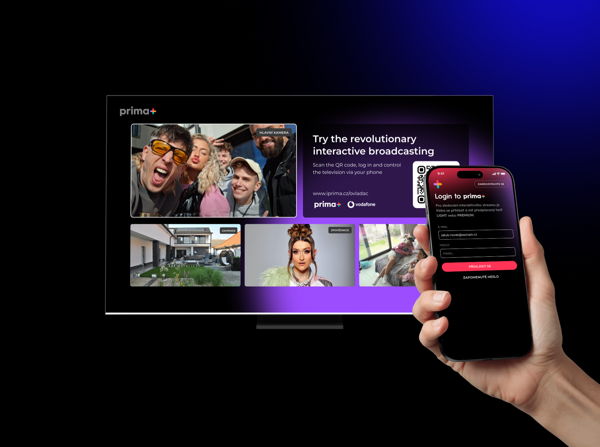
- Stored or handed-off payment (saved card, QR on TV)
- Instant entitlement (unlock appears in the same stream)
- Fail-soft fallback (retry without losing the moment)
The operators proving it are turning “watching” into “participating”
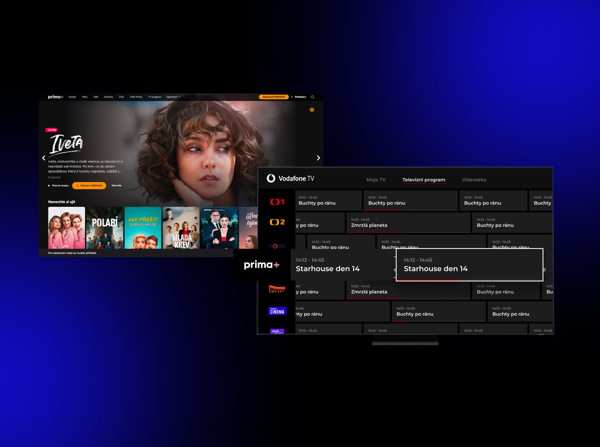
Now the operator examples start to make sense as pattern-matching, not one-off creativity. OKTAGON didn’t win by inventing a new plan; it won by turning the live stream into a place where paying felt like participating, right when the fight got tense. Vodafone widened the surface area by proving the same idea can start in browsing, with EPG prompts that let fans choose upgrades before they ever press play.
In both cases, the quiet advantage is operational: interaction is instrumented as first-party behavior signals, and new formats can ship as a layer on top of existing distribution rather than a multi-quarter rebuild. Put together, the clues point to the same conclusion—hybrid monetization works when commerce is part of the experience, not a separate destination.
Hybrid monetization works when you build “upgrade rails” inside the live stream
Here’s the earned reframe: hybrid monetization isn’t three revenue models. It’s one behavioral system that moves a viewer from reach to intent to transaction without forcing them to leave the moment.
Once you see it that way, a lot of “smart” strategies start looking backward. More pricing tiers won’t fix a broken conversion window, and bigger bundles won’t help if the viewer only wants a better version of what’s happening right now.
The simplest way to hold the system in your head is a three-part mental model I call the Peak Moment Loop. First comes the trigger: overtime, the final round, the last lap—something that spikes emotion and narrows attention. Then comes the rail: an in-stream prompt paired with a near-zero-friction path to pay, designed for the device the viewer is already on, including TVs where remotes and keyboards quietly add friction. Finally comes the reward: something immediate enough that it feels like an extension of the broadcast—an alternate angle, an ad-free final stretch, a premium stat pack, behind-the-scenes access.
Notice what this loop doesn’t require: a new pricing architecture. It requires “upgrade rails” that make things like in-stream pay-per-view (PPV) feel less like checkout and more like participation. This is also where time-to-market matters, because you can’t wait three quarters to learn which trigger converts.
The pattern is easiest to execute when commerce and measurement can be added as a modular layer on top of existing feeds, so you can test prompts, rewards, and entitlement logic without swapping out your player or backend. Tivio Studio is one example of that approach: it overlays interactive transactions and data capture onto the streams fans already watch. That matters because it lets the same Peak Moment Loop show up across web, OTT, Pay‑TV, Smart TV, and HbbTV, where cross-device friction is the default and consistency is the advantage.
If you want a benchmark for the rail at internet scale, YouTube’s PPV purchase prompt built for fast in-flow conversion is a reminder that checkout is part of the broadcast.
.png)
A practical hybrid monetization framework for live streaming monetization leaders
If you lead product or monetization for a broadcaster, OTT platform, telco, or rights holder, this changes your job description slightly. You don’t control attention; you control the rails that appear when attention spikes. Here’s a compact framework you can run without turning it into a platform rebuild.
- Map peak moments: pick the five emotion spikes in your last tentpole and decide which two deserve an unlock.
- Define three offers: free-with-ads for reach, a membership for belonging, and one or two moment passes for selective-pay fans.
- Engineer friction out: use stored payment, QR handoff on TV, instant entitlement, and a fail-soft retry so the stream keeps moving.
- Instrument intent: track prompt views, clicks, unlock attempts, and post-prompt drop-off as leading indicators, then let revenue and retention be the lagging scorecard.
- Re-bundle rights value: package the rails and measurement into the feed so partners can launch interactive monetization without multi-quarter integration cycles.
This is how you fight stagnant ARPU without narrowing reach, because selective fans can pay for “this” without being forced into “always.” It’s also how you learn faster, because every prompt produces first-party signals you can tune in the next event, not the next season. And it’s why Vodafone’s example matters: embedded commerce prompts inside the EPG for operator-scale reach show that sometimes the best time to sell the moment is before “Play” is pressed. Do it well, and hybrid monetization stops being a “pricing project” and becomes an operating rhythm.
Getting paid without breaking the moment
The teams that win with hybrid monetization won’t be the ones with the most elaborate pricing architecture. They’ll be the ones with the best-timed, lowest-friction moment rails.
In the next 48 hours, run a fast audit on your last major live event. Write down the exact timestamps where emotion spiked, then ask one uncomfortable question: what could a one-click unlock have offered right there that would feel like “more of the moment,” not a detour away from it? Pick one unlock to pilot-multi-cam, ad-free final minutes, backstage, a premium stats layer-and define success before you ship. Start with intent metrics (prompt views and unlock attempts), then watch conversion and retention through the peak to see whether the loop is working.
If you want a concrete picture of what “participation you can pay for” looks like, turning live event peaks into in-stream purchases and premium unlocks is a useful reference point. The question isn’t whether fans will pay. It’s whether you’ll let them pay at the only time they truly want to.

Adrian Janon