What Is Interactive Live
Streaming? A 2026 Field Guide for Broadcast and OTT Leaders
When Viewers Stopped Just Watching

On a Saturday night in late 2025, two live events went head-to-head.
On one screen: a high-stakes MMA main event, the kind of bout that fills arenas and drives pay-per-view buys. On another: the finale of a wildly popular reality show, complete with celebrity judges and a seven-figure prize.
Both had comparable rights packages, star power, and marketing budgets. Both opened strong.
Yet by the first ad break, something strange appeared in the data.
The reality-show stream looked like every traditional ratings chart you’ve ever seen: a spike at the start, then a steady slope downward as viewers drifted away to social feeds, group chats, and betting apps.
The MMA stream did the opposite. Session lengths climbed as the night went on. Viewers stayed through the undercard. Many watched past the main event into the post-fight show.
When I dug into what separated these two events, it wasn’t production quality or talent. It was how interactive the live experience felt.
During the MMA card, fans weren't just watching. They were:
- Unlocking a “referee cam” via a quick QR scan.
- Voting live on “Fight of the Night.”
- Tracking real-time stats and fantasy-game outcomes without leaving the player.
- Triggering in-stream microtransactions for bonus content.

That interactive OTT sports experience, built on Tivio Studio’s platform, turned passive fans into active participants and unlocked new monetization—from subscriptions to PPV to microtransactions—as documented in this interactive OTT sports case study with in-stream PPV and polls.
When I zoomed out to look at the broader market, something odd emerged: the biggest performance gap between winning and lagging live events wasn’t about content quality at all. It was about whether the stream itself invited viewers to do anything.
Why Great Live Content Still Bleeds Attention
If live sports and unscripted shows are supposed to be “stickier” than on-demand, why do their drop-off curves increasingly resemble any generic passively streamed show?
On paper, live is booming. Analysts project the global video streaming market will grow from about $129 billion in 2024 to roughly $417 billion by 2030, with live capturing the largest share, according to video streaming market projections. Within that, the interactive segment is racing ahead: estimates suggest interactive streaming will jump from $32.9 billion in 2024 to $42.4 billion in 2025 and could surpass $115 billion by 2029, based on interactive streaming market growth analysis.
Yet inside many broadcasters’ and OTT operators’ dashboards, a different story plays out:
- Audience drop-off in the first 5–15 minutes.
- Flat engagement curves during tentpole events.
- Limited conversion on premium offers, despite huge marketing push.
We know the stakes. One analysis found that around half of viewers abandon a live stream within roughly 90 seconds if quality or experience disappoints, as reported in live streaming statistics on drop-offs and quality abandonment. That’s not just a “bit of churn.” It’s a structural leak.
Talk to different leaders and you hear versions of the same complaint:
- Broadcast & media executives see audience drop-off during their biggest shows and can’t tie it to any obvious content failure.
- OTT platform leaders invest in originals and marketing, only to watch users alt-tab to social apps during critical moments.
- Telco and pay-TV product heads know their EPGs are passive, but fight integration complexity and legacy systems.
- Sports rights holders feel they’re leaving money on the table every time a knockout, penalty, or cliffhanger moment passes without an in-stream monetization hook.
It’s tempting to blame “content fatigue” or “too much competition.” But when you overlay viewer behavior, a different culprit appears.
Modern audiences already interact—with each other, with brands, with odds, with products—while they watch. The paradox is that the more you design your live stream as a lean-back experience, the more you push your audience to lean forward somewhere else.
The real question becomes:
What if your problem isn’t tool fatigue or content fatigue—it’s passivity baked into how your live events are designed and delivered?
The Counterintuitive Law of Modern Live Events
1. The Lean-Back vs. Lean-Forward Inversion
Here’s the counterintuitive idea that kept surfacing as I connected the dots:
The more you design live streams as lean-back TV, the more you force your audience to lean forward somewhere else.
Think about a Champions League match.
You might assume your competition is another match or a different streaming platform. But for a viewer, the real competition is:
- A betting app with live odds.
- A social feed full of memes and instant replays.
- A shopping app pushing limited-edition jerseys.
Each of those environments is interactive by default. Each offers agency, social context, and rewards. If your live stream is just a high-quality video pipe, you’re effectively handing all the interactive value to someone else’s product.
That’s why, by 2026, a new law is emerging:
Interactivity is no longer a feature. It’s the operating system for live events.
If you don’t design live events around that OS, you can’t reliably:
- Retain attention.
- Capture moment-based revenue.
- Learn from real-time behavior.
You’re running a world-class show on yesterday’s infrastructure.

2. Less Interface, More Interaction
There’s a second counterintuitive twist: interactivity doesn’t mean clutter.
Many broadcast and product teams quietly worry that adding interactive layers will make their sleek, cinematic streams feel like noisy gaming interfaces. It’s a valid concern—and it’s also a false choice.
When I looked at the streams that successfully blended high production value with interactivity, they had something in common: the UI was simple. The orchestration was complex.
The most effective interactive live streaming experiences rely on:
- Few, well-timed prompts, not constant pop-ups.
- Context-aware overlays that appear when relevant and hide when not.
- Low-latency infrastructure so interactions feel instantaneous.
Advances in edge computing and low-latency HLS/DASH are key here. Providers have demonstrated end-to-end latencies under 200ms while supporting synchronized multi-camera feeds and real-time overlays, as described in Videon’s overview of edge computing in live video.
The upshot: You don’t need to bombard viewers with widgets. You need to schedule a few meaningful actions at the right moments—and ensure the system responds fast enough to feel alive.

What This Means for Revenue Leaders in 2026
Most go-to-market plans for live content still follow an old, linear script:
- Spend big on rights or production.
- Promote heavily.
- Hope ratings and ad sales justify the investment.
Interactivity is treated, at best, as a nice-to-have experiment on the side.
For today’s audience, that script quietly fails.
- Audience drop-off & declining engagement metrics
Without a deliberate sequence of interactive beats, your live stream feels interchangeable with any other. Viewers stick around for the opening and drift away when the experience flattens. - Stagnant ARPU & limited monetization options
If the only levers are subscriptions and pre-sold ad slots, you can’t capitalize on peak emotional moments in real time. Microtransactions, PPV upgrades, and shoppable overlays remain untapped. - Slow rollout of new features
When every interactive experiment requires deep integration with legacy systems, your innovation cycle grinds to a halt. By the time a feature launches, audience expectations have already moved on. - Limited data on viewer interaction
Ratings tell you how many watched. They don’t tell you what they did, when they leaned in, or where they were ready to buy.
Meanwhile, platforms like Twitch, YouTube, TikTok, and Prime Video are training viewers to expect live interactivity, while brands and advertisers gravitate toward formats that offer measurable engagement and commerce signals.
Interactive live streaming isn’t a “nice-to-have.” It’s becoming the price of staying relevant.
From Viewers to Participants (And What You Do Next)
Step back and the story is simple.
We’re moving from an era of broadcasting to audiences to one of staging experiences with audiences.
By 2026, the most valuable live streams won’t be the ones with the sharpest picture or the biggest star. They’ll be the ones where viewers can recall what they did:
- The prediction they made that came true.
- The angle they chose that caught the decisive moment.
- The limited-edition item they bought in the heat of the game.
- The vote they cast that changed a show’s outcome.
Ignore interactive live streaming and you face predictable consequences:
- Drop-off and churn remain stubbornly high.
- Ad and sponsorship dollars migrate to platforms that offer measurable engagement and commerce.
- Fans build their habits—and loyalty—around ecosystems you don’t control.
Embrace it and you get something different:
- Each live event becomes a lab for engagement and revenue innovation.
- You build defensible audience relationships grounded in participation, not just access.
- You collect real-time signals that shape programming, product, and pricing decisions.
Interactive live streaming isn’t an overlay on your strategy. It is the strategy for making live content worth more than a one-time tune-in.
Throughout this piece, Tivio Studio has been a quiet supporting character—a proof point that this shift is real, not theoretical.
Tivio’s interactive streaming platform effectively acts as an event operating system:
- For broadcasters and OTT platforms
- Multi-camera switching, live polls, real-time stats overlays.
- Patented in-player PPV and QR-based microtransactions.
- A “no-integration” deployment model that lets teams experiment without ripping out existing stacks.
- For telcos and pay-TV providers
- Interactive EPG channels that turn a static guide into a live engagement surface.
- Embedded commerce and analytics that unlock new revenue lines.
- For sports rights holders and live promoters
- Fan participation layers that turn moments of peak emotion into measurable engagement and monetization.
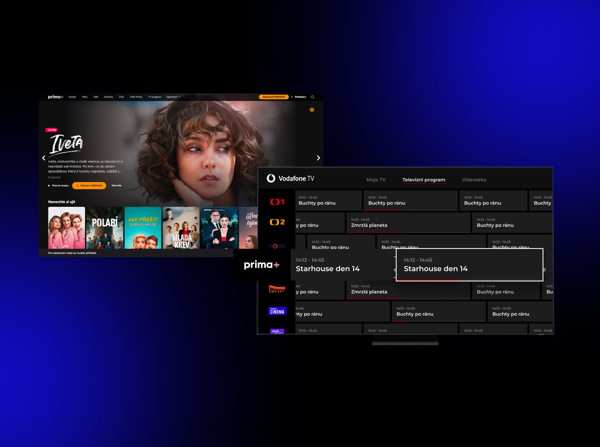
The OKTAGON MMA and Vodafone collaborations show how different parts of the media ecosystem can apply the same interactive OS mindset, as evidenced in their respective interactive sports OTT case study and interactive EPG transformation case study.
The next time the lights go up on your live event, the most important question won’t be how many people tuned in.
It will be how many chose to stay, vote, unlock, and come back.
That’s the quiet revolution interactive live streaming is already writing across sports, entertainment, and telco.
The only decision left is whether you write it into your roadmap.
For more details please contact:

Adrian Janon